ReShiki 0.13.1
ReShiki 0.13.1 improves atom-label editing, crystal substitutions, 3D model controls, drawing tools, recovery and feedback on large drawings. It also corrects PDF shading and browser clipboard behavior. The changes below retain their contributor credits and links to the original comparisons and limits.
Release downloads · Previous release · Release validation.
File compatibility
Section titled “File compatibility”Every drawing saved in 0.13.1 uses document version 30. ReShiki 0.13.0 and earlier cannot open these files, even when the drawing contains no crystal or other new feature. Older versions ask you to update. Older drawings still open in 0.13.1. Keep a copy saved by an older version before saving in 0.13.1 if you share drawings with someone who still uses it.
Version 30 preserves the source of bonds inferred from crystal atom distances. Removing a cell must not silently turn those bonds into validated chemical bonds. Version 29 crystals still open and acquire this context from their live cells. If a version 29 drawing’s cell was already removed, reopen the original crystal file to recover the missing context.
Highlights
Section titled “Highlights”- Edit atom labels beside their structure, read the complete choices and accept chemical suggestions with one click. Typed protecting groups preserve sugar stereochemistry, and repeating a label avoids flashing the editor.
- Keep crystal substitutions, cell copies and import notes together. Properties distinguishes whole-drawing values from the selected fragment and explains when distance-derived crystal bonds cannot support chemical analysis.
- Move a selected 3D model from its frame edge, reach its controls directly, keep captions attached while resizing and open models facing their drawings.
- Review recovery drafts before restoring or discarding them. New drawings remember the chosen canvas brightness.
- Read clearer import, export and clipboard feedback. Long Structure-input operations show elapsed time and can be cancelled without changing the drawing.
Fixes and comparisons
Section titled “Fixes and comparisons”@Ameyanagi — Updated application dependencies and build runtimes for the October security advisories, including CVE-2026-111497, merged in PR #586. GitHub Actions prepares and verifies a patched runtime before running JavaScript actions. The security review records the updates, remaining scoped findings and verification limits tracked in issue #585.
@Ameyanagi — deterministic owned indicators and mapped RSMI/RXN reference coverage in PR #589. Validation and limits.
@Ameyanagi — keep Commands responsive on large selections while preserving selection and keyboard-target behavior, in PR #590. Bounded native QA and regressions.
@Ameyanagi — preserve synthetic paste payloads across Firefox, Chromium and WebKit in PR #591. Synthetic-event scope.
@Ameyanagi — present large-selection PDF progress sooner in PR #592. Controlled M1 median of 30.036 ms and equivalent PDF output. Original M4, window/target, physical-click and scanout conditions remain qualified.
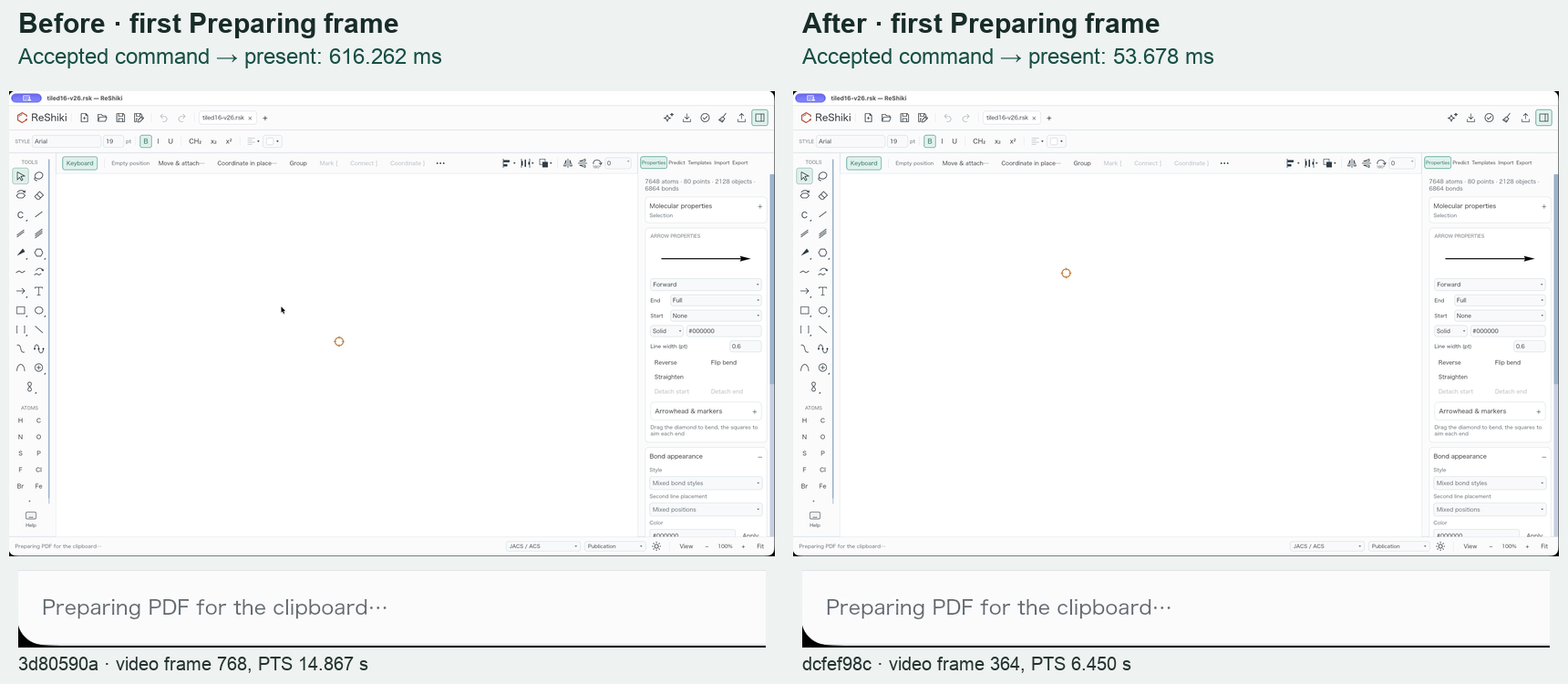
@Ameyanagi — PDF copies of large selections show progress before conversion and retain the canvas caches in PR #582. Native timing, copied-output comparison and reproduction. Local M1 acknowledgment improves from 616.262 ms to 53.678 ms, with completion from 1,564.521 ms to 776.795 ms. The literal 33.3 ms/M4 target remains unverified.
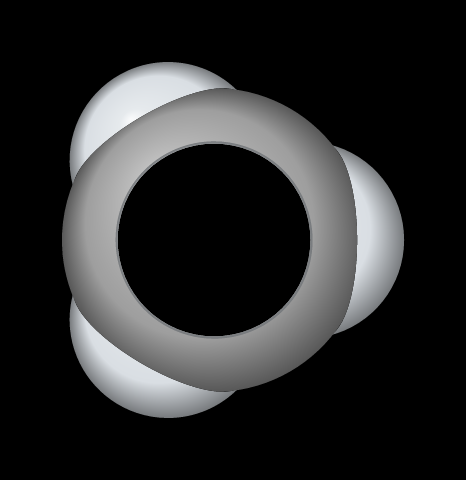
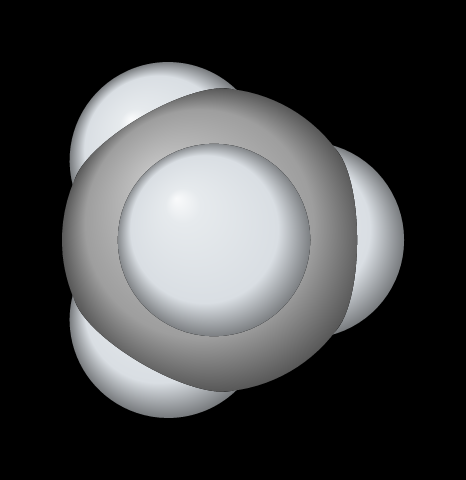
Space-filling models keep hydrogens facing the viewer visible where overlapping atoms meet. The front cap no longer leaves a hole through its carbon. @Ameyanagi, PR #535. Matched renderer review.
| Before | After |
|---|---|
 |
 |
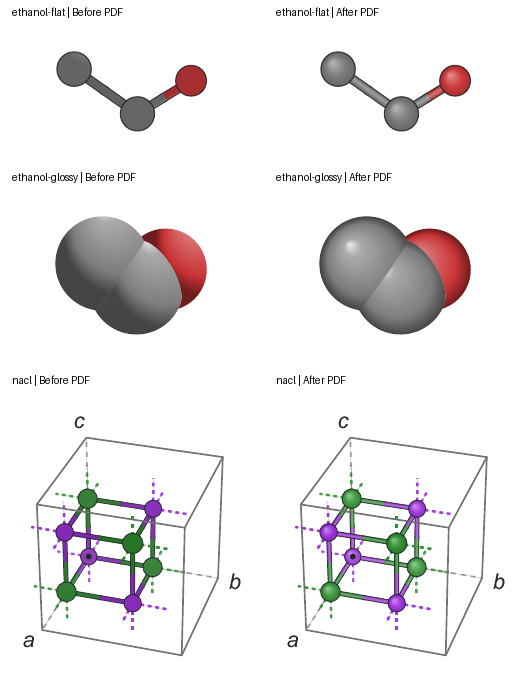
PDF export keeps 3D model and crystal shading aligned at publication size. @Ameyanagi, PR #536. Matched export review and reproduction.
Crystal files passed to the CLI now produce a clear unsupported-format message instead of a SMILES parse error. Rejection happens before input is read or output is created. @Ameyanagi, PR #537. Command examples and validation.
@Ameyanagi — long polystyrene and alanine chains import with separated rings and chemical labels while retaining molecular identity and stereochemistry in PR #539. Matched renderer comparisons, inputs, and bounded fallback behavior. Import latency is tracked separately in #508.
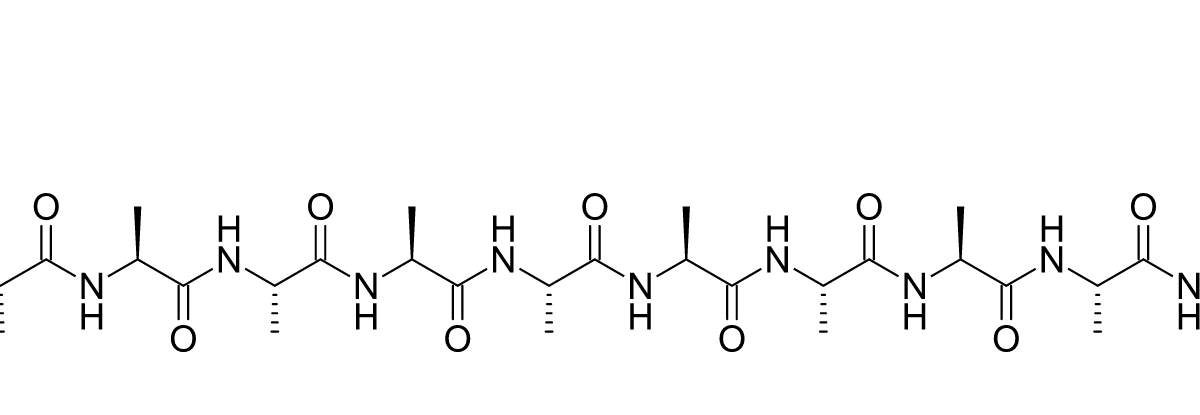
@Ameyanagi — drag the visible frame edge to move a selected 3D model while keeping its view and selection in PR #540. Matched native desktop evidence and editable fixture.
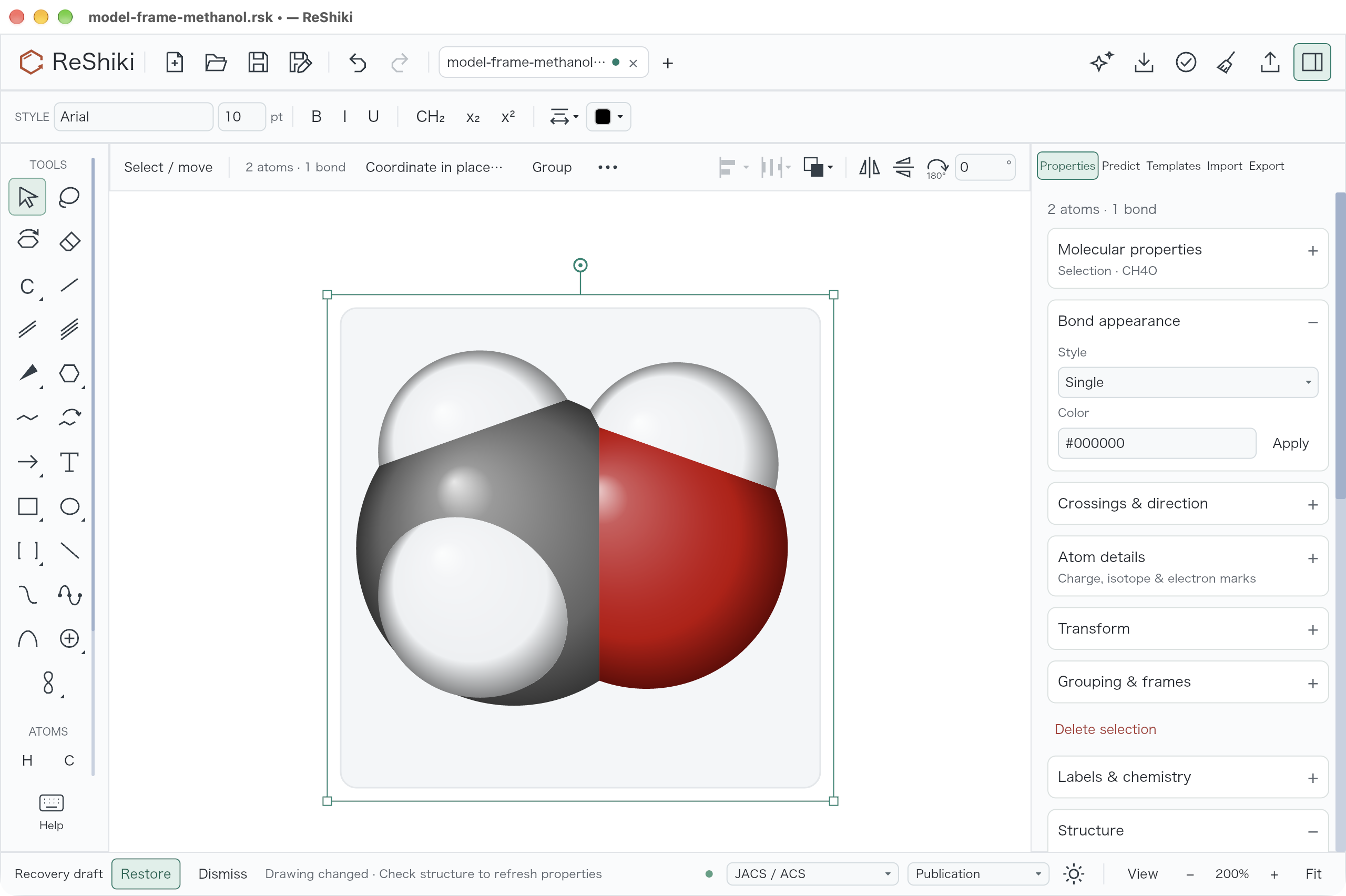
@Ameyanagi in PR #541.
Safari pastes clipboard text into captions and Import fields without turning Command-V into a typed v.
Evidence, comparisons, and reusable release material.
@Ameyanagi in PR #542.
Crystal import notes stay with the drawing and survive native save/reopen; the guide now explains the opening view correctly.
Evidence, comparisons, and reusable release material.
@Ameyanagi in PR #543.
Edit atom labels beside their structure, read every label type in full, and accept catalog suggestions with one click.
Matched examples and release material.
@Ameyanagi in PR #544.
Fragment-name fields start fresh with a new selection or drawing, saved abbreviations show a short confirmation, and content-specific panels return to Properties when the drawing changes.
Matched examples and release material.
@Ameyanagi in PR #545.
Chemical marks and aimed arrowheads stay clear of drawing ink, reaction separators follow visible labels, long terminal text keeps its bond visible, and chemical symbol tools support repeated placement.
Matched examples and release material.
In PR #557: Export dialogs name their format, browser progress and download receipts describe what happened, and the npm package has a complete HTML recipe with the correct release version. See the QA report for validation and screenshots.
Contributor: @Ameyanagi.
In PR #558: Crystal substitutions keep their cell and copies, update the drawn formula, and preserve unvalidated bond context after unsupported edits. See the QA report for validation and screenshots.
Contributor: @Ameyanagi.
In PR #559: Large peptide imports avoid repeated ring searches during label placement. Long-running Structure-input operations show elapsed time and can be cancelled without changing the drawing. See the QA report for measurements and screenshots.
Contributor: @Ameyanagi.
In PR #560: See the label the Text tool will repeat, keep its chemical meaning, and read clear feedback for generic and refreshed drawings. See the QA report for validation and screenshots.
Contributor: @Ameyanagi.
In PR #561: Reach 3D controls in one click, bring clipped models into view, recover directly from blocked scale commands, and cancel long native model generation with Escape. See the QA report for validation and screenshots.
Contributor: @Ameyanagi.
In PR #562: Help prefers shortcuts available in the current drawing mode among equally strong matches, shows labelled ring-fusion examples, and uses a readable Shift search hint. See the QA report for validation and screenshots.
Contributor: @Ameyanagi.
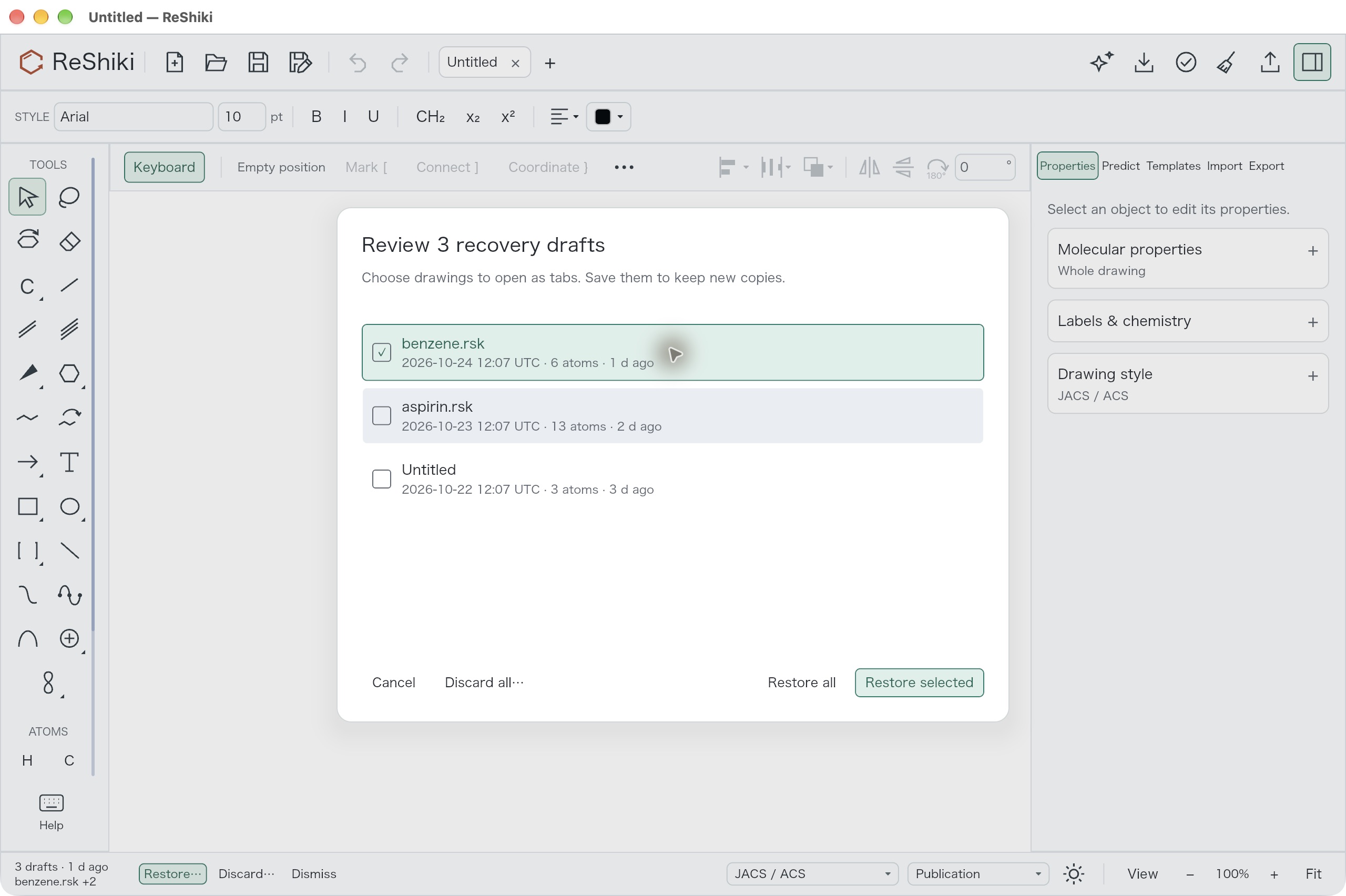
Review recovery drafts by title, date and size, restore only the drawings you need, or move abandoned copies to the Trash. The browser asks before permanently deleting recovery copies and keeps failed operations retryable. Contributed by @Ameyanagi in PR #563 for issue #491. QA report and limits: native Trash interaction was checked on macOS; Windows and Linux runtime checks remain pending.
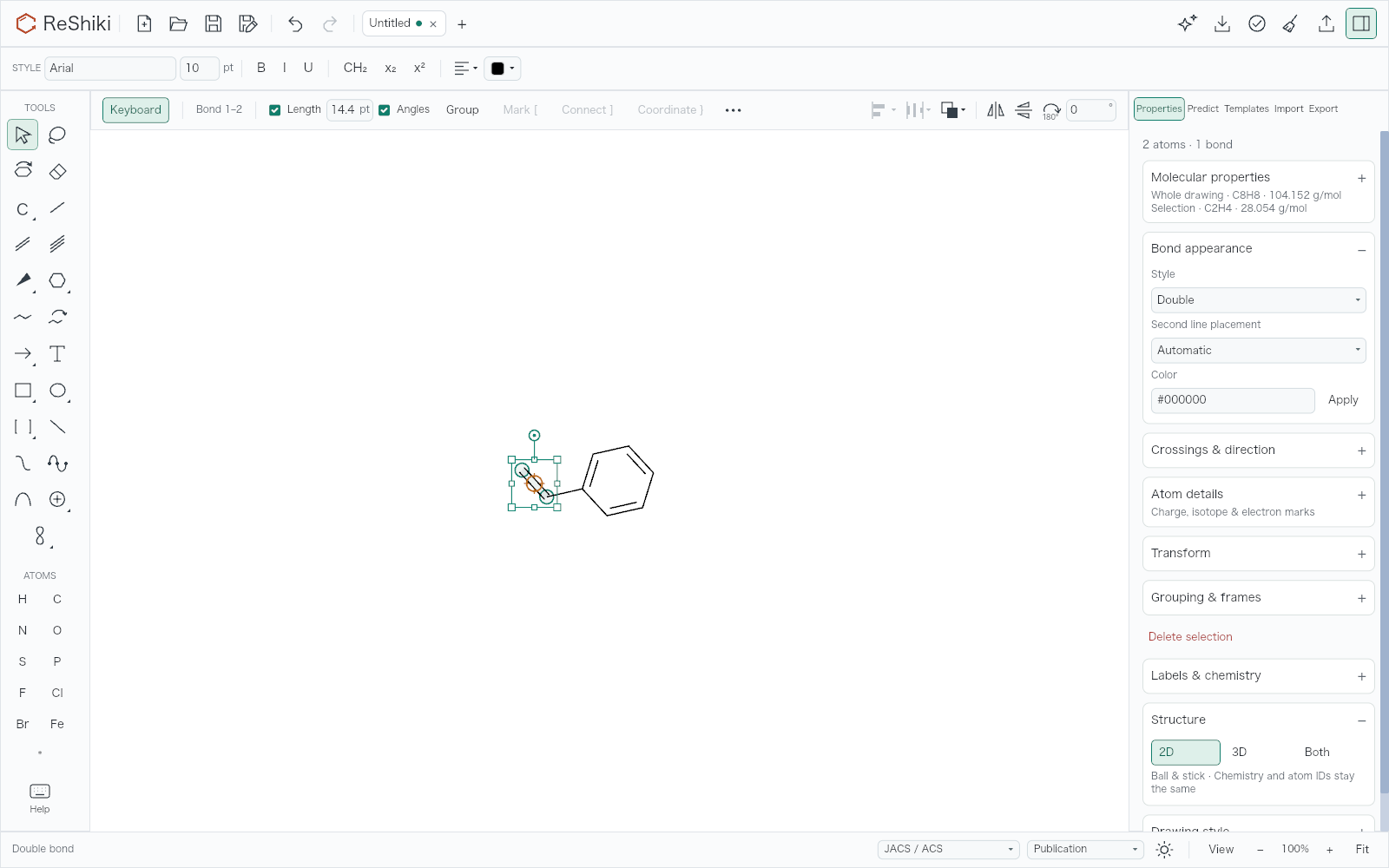
Keep whole-drawing formula and mass visible beside selected-fragment properties, preserve the explicit Molecular header choice in new and replacement tabs, keep molecular values visible while choosing drawing tools, and correct singular atom/bond counts — @Ameyanagi in PR #564. This addresses #548, #550, #551, and #554. Matched renderer and native input evidence.
Copy as names unsupported text labels, points to ordinary Copy and exposes the full refusal behind a visible status cue; narrow windows keep every footer control visible. @Ameyanagi in PR #565, addressing #499.
CDXML/CDX refusals identify the actual unsupported label instead of calling the drawing invalid or listing absent ring curves. They suggest the platform’s ordinary Copy shortcut and native save. Strict export still refuses unsupported content, and a failed Copy as operation leaves the clipboard unchanged. The footer reserves its height before delayed progress appears, with a second row below 1280 logical pixels wide.
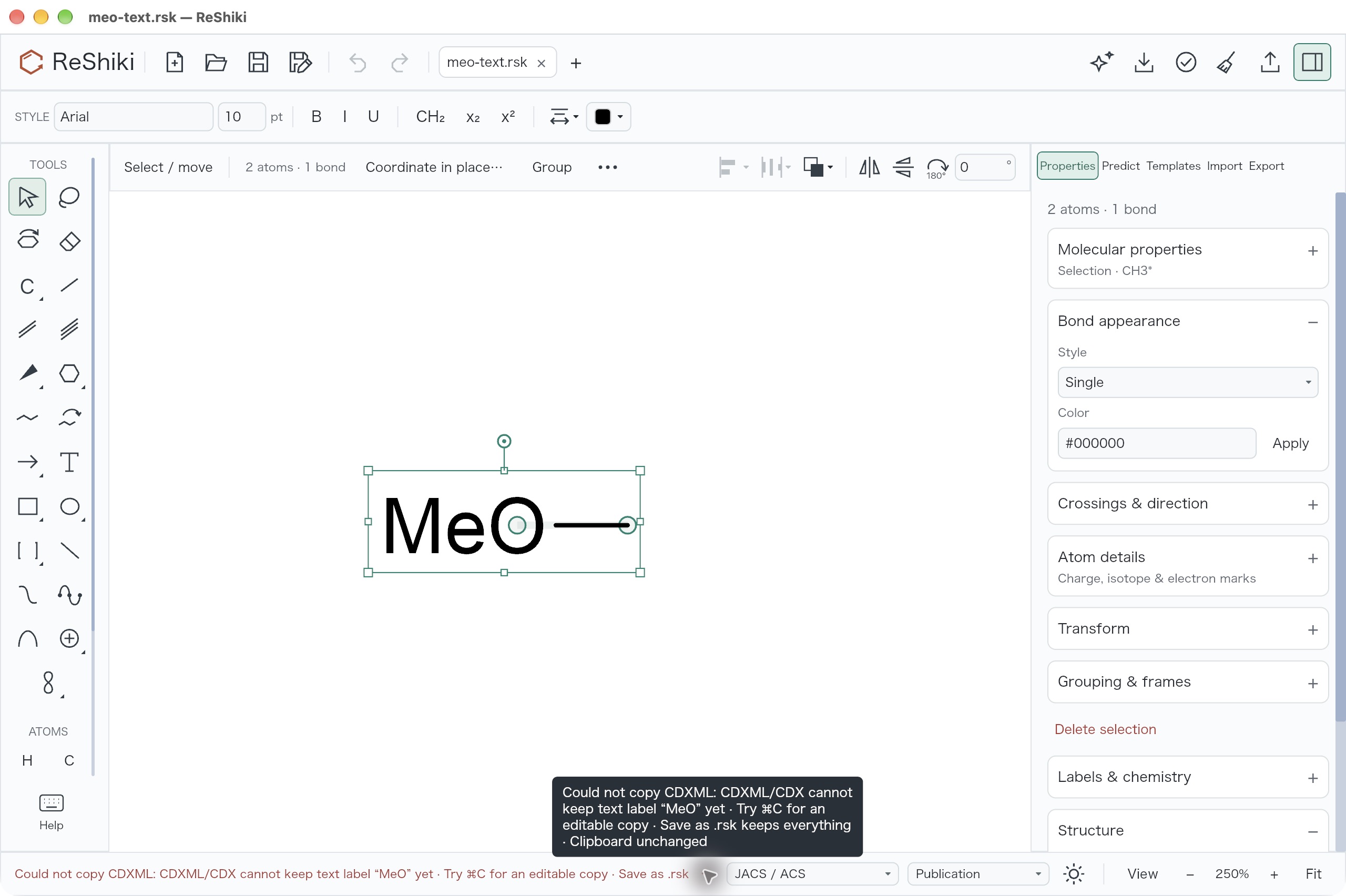
Matched native images, input fixture and combined footer checks record the macOS menu/hover interaction and real-renderer layout results. Windows/Linux native interaction and a new ChemDraw round trip are not claimed.
Inspector page changes keep the drawing in place, and positioning atom marks keeps its controls visible and is available from the atom’s context menu. @Ameyanagi in PR #566, for #533 and #534. Matched renderer and native QA.
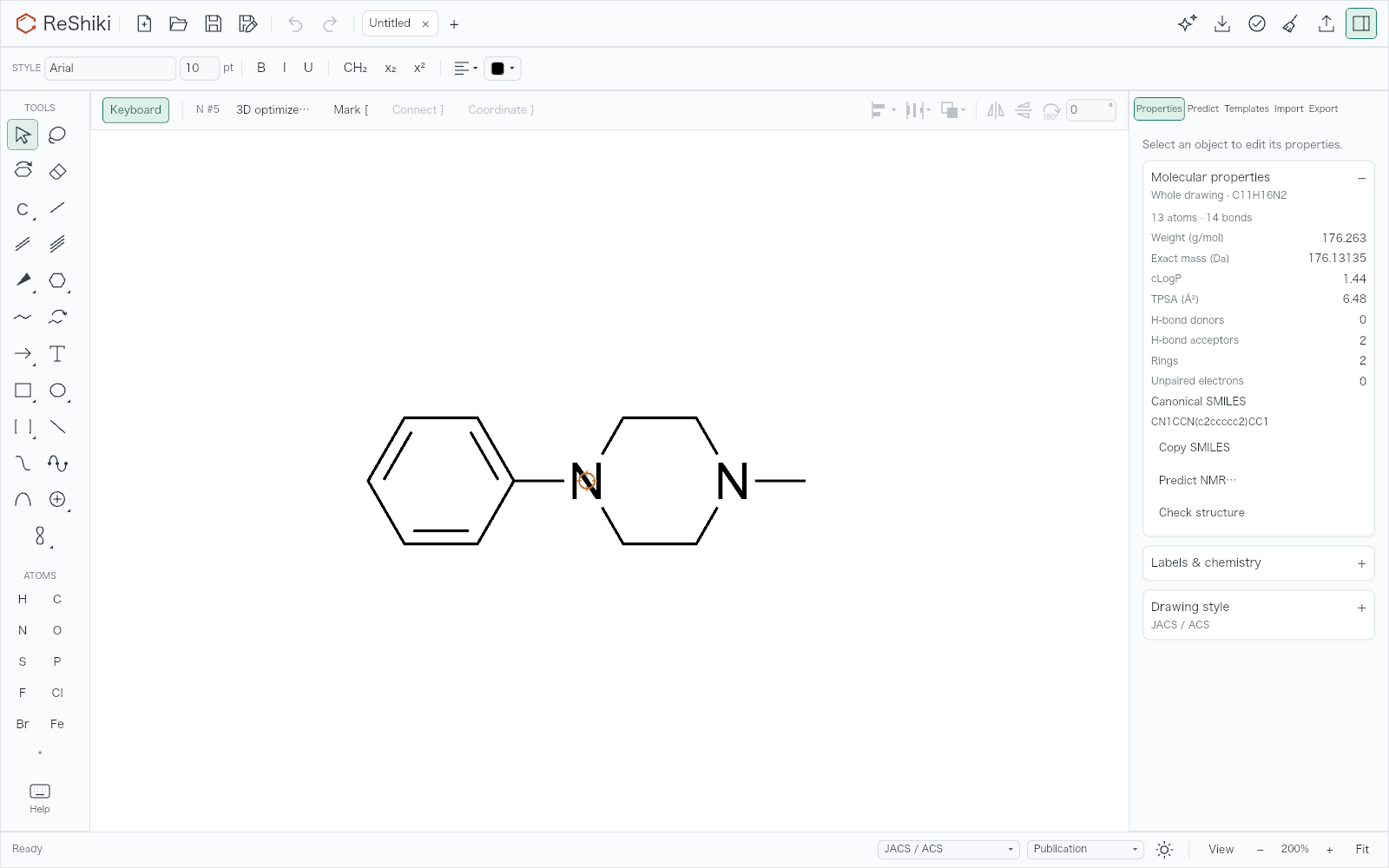
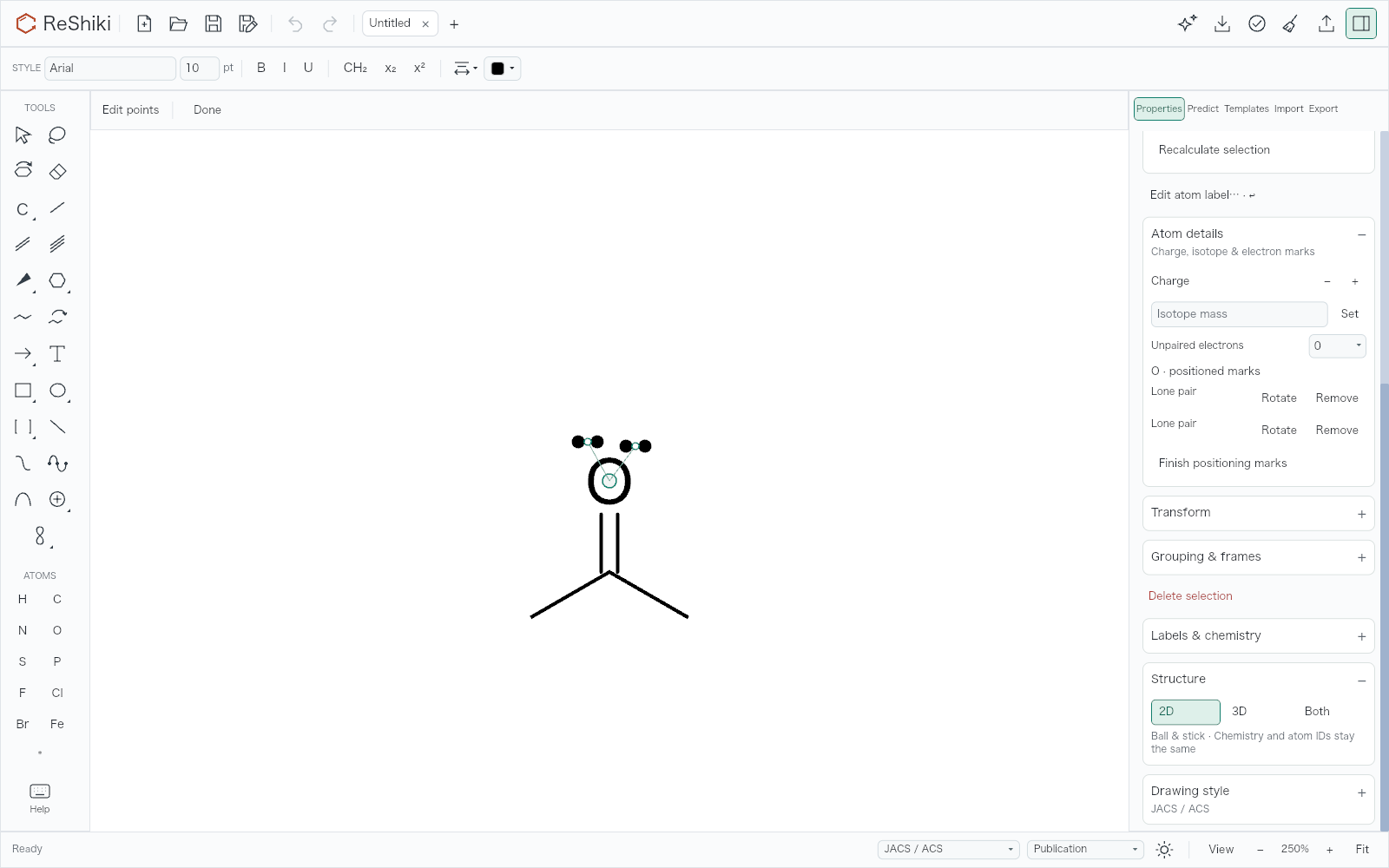
@Ameyanagi in PR #567:
- Rotation frames follow upright labels, and the angle readout moves clear of label ink while dragging.
- Rotation hints yield when editing an angle, keeping the canvas clear while typing.
- Three atom columns keep all eleven choices visible in a 1600 × 1000 macOS window, with H and C first. The default 1280 × 820 client size still scrolls for lower rows.
- Reopening Structure selects the retained draft for replacement, and Clear empties it.
Matched before/after images and native interaction verification cover all four changes.
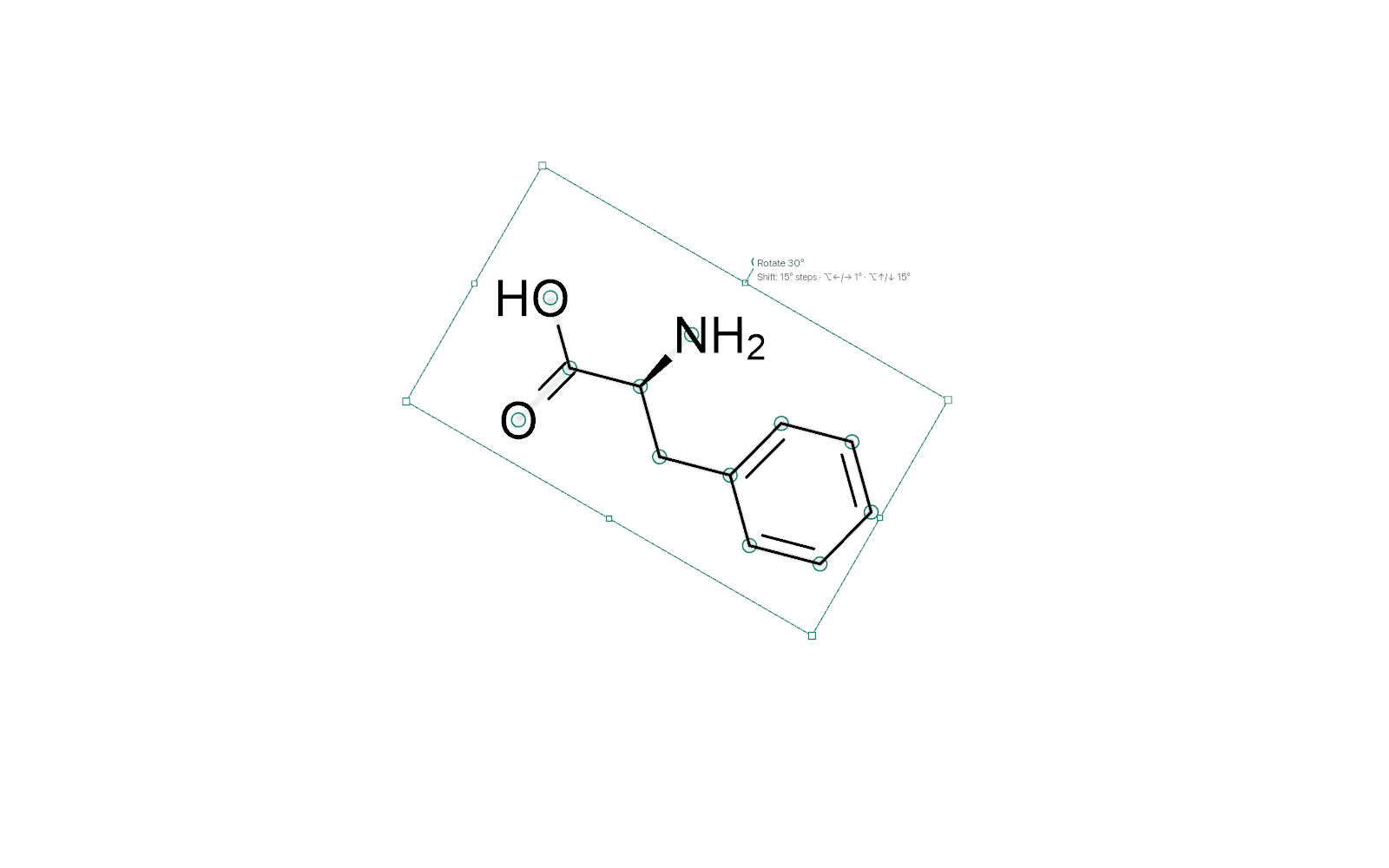
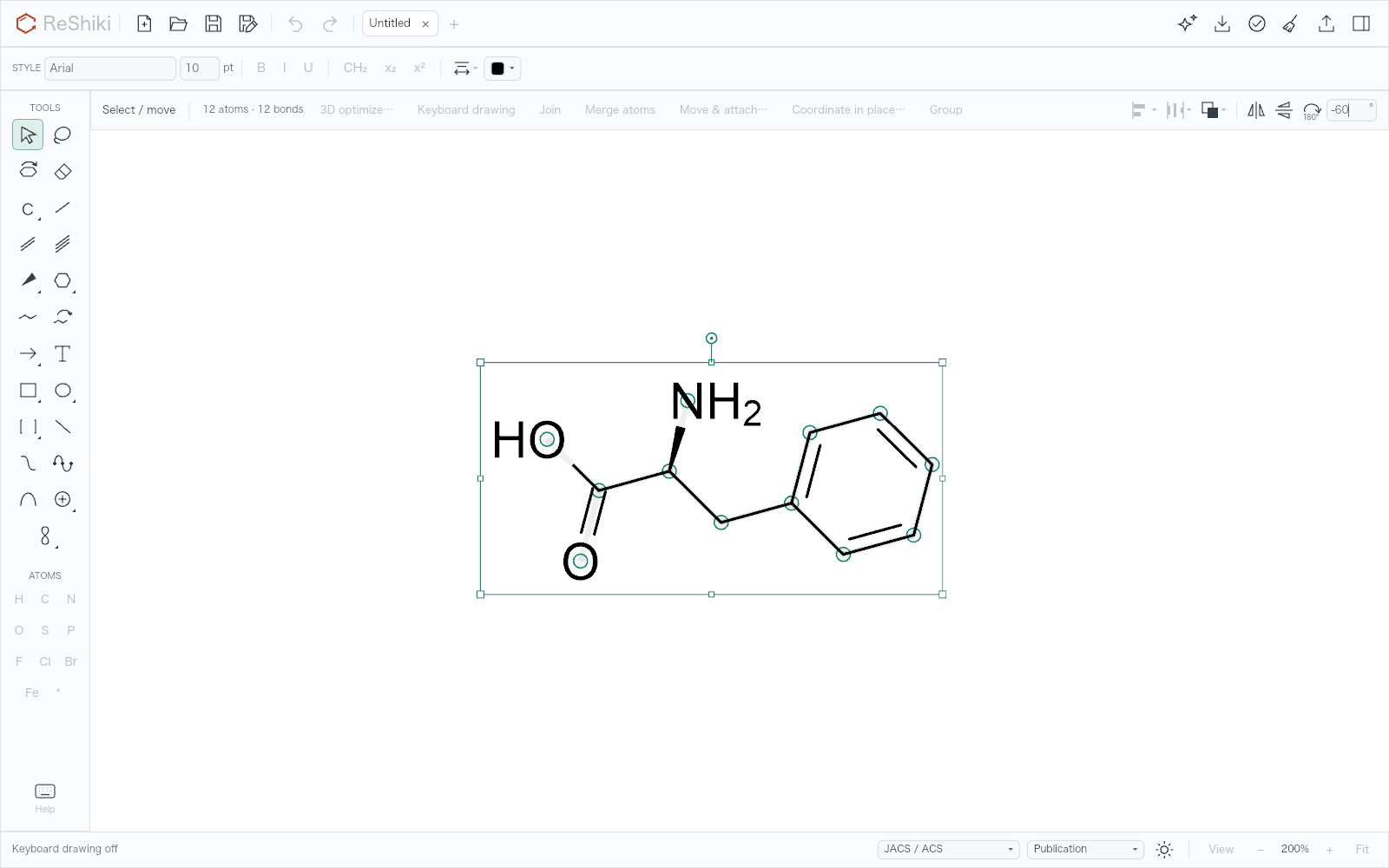
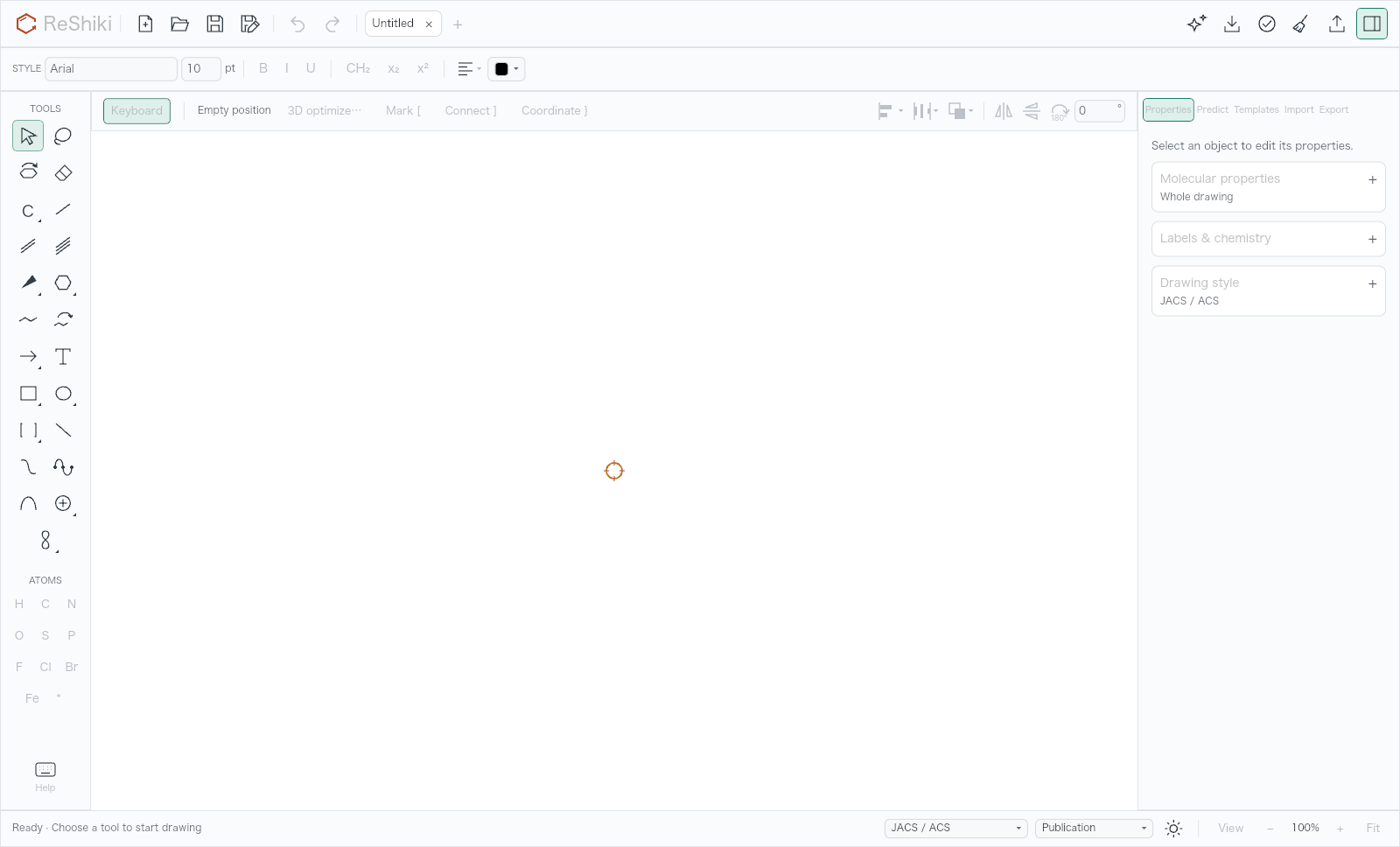
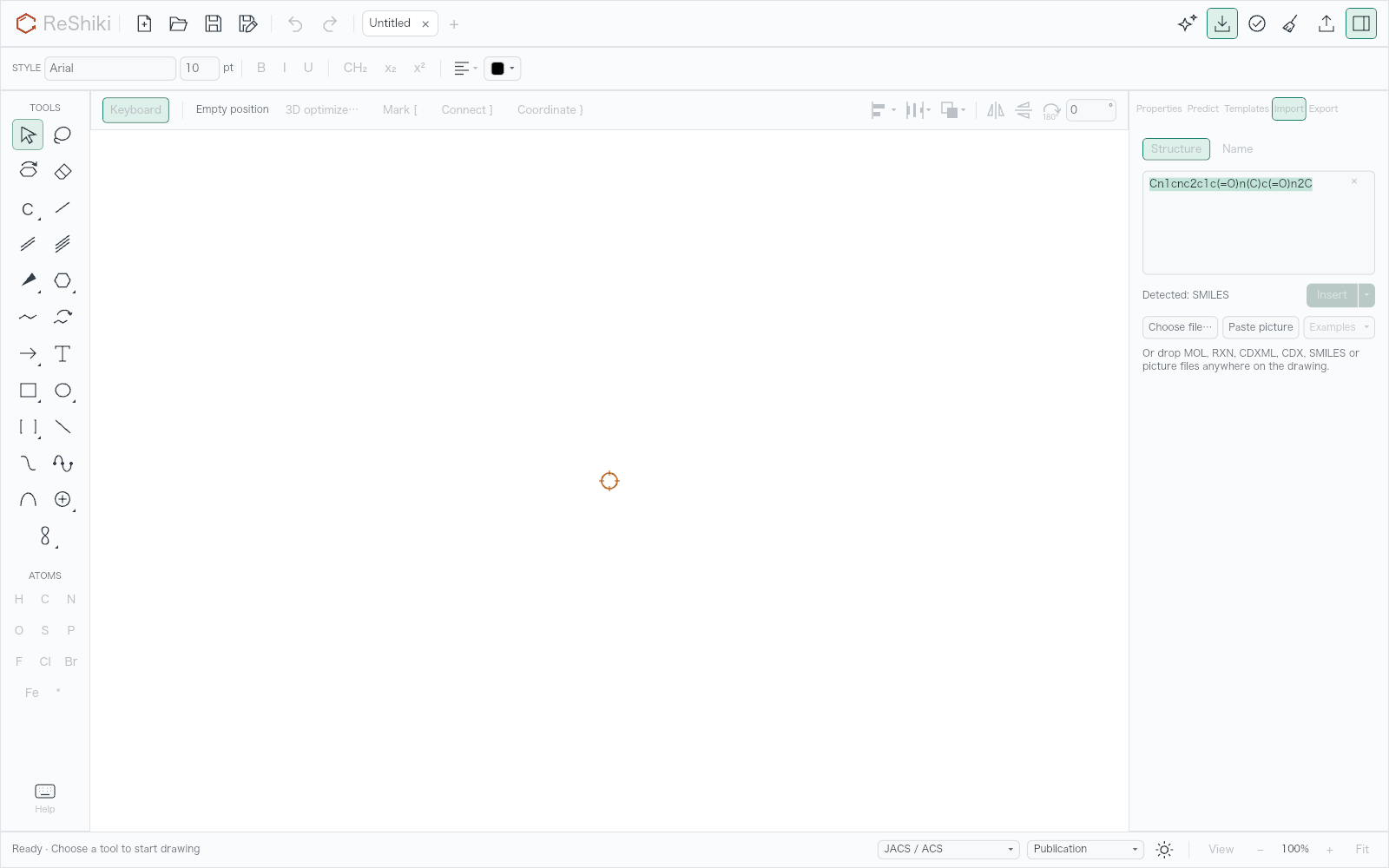
In PR #568, by @Ameyanagi: typed protecting groups retain sugar stereochemistry, choose a clear reading beside nearby labels and repeat without an editor flash. The QA record includes stereo round trips, matched Properties results, native interactions and original gesture clips with capture timestamps. Placement checks use a bounded local context; oversized or incomplete context retains the established reading.
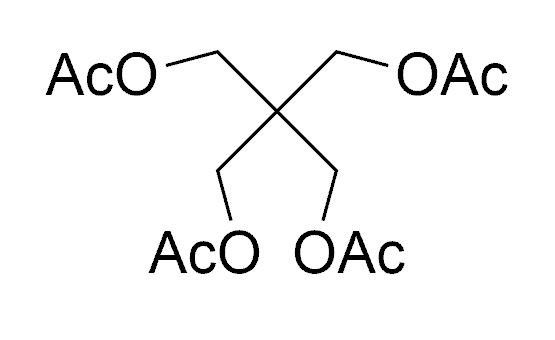
- Arrow Properties identifies the selected arrow count in mixed or multiple selections, and Atom labels & numbering uses the matching ‹ Properties backlink. @Ameyanagi in PR #577 for #575 and #576; native review.
PR #579 aligns opening and reset 3D model faces with their drawings, keeps chemical-name captions attached during model resizing, and shows rotation instructions before the first drag. Proper rotations preserve chemical stereochemistry; saved views and crystal cell orientation retain their existing behavior.
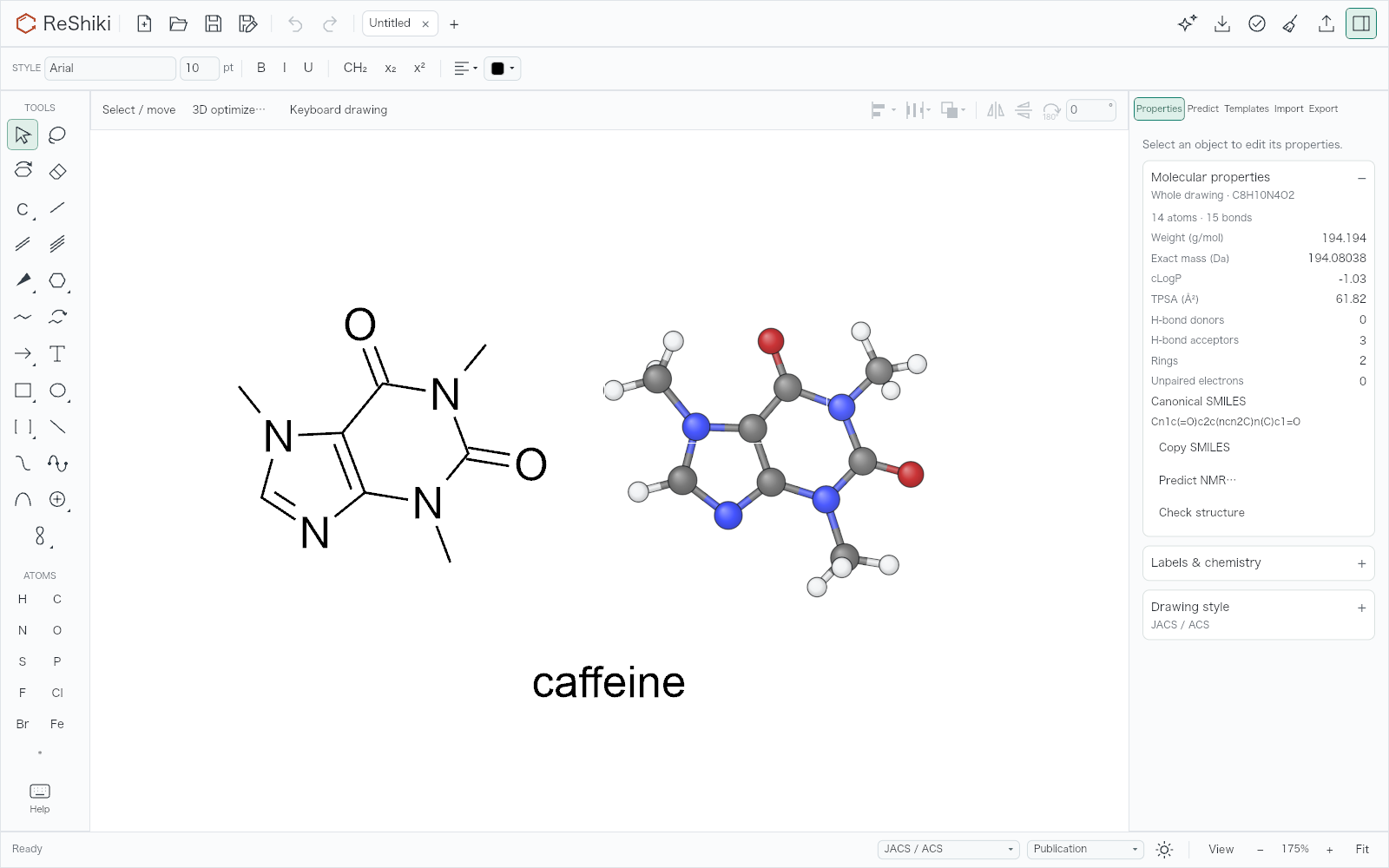
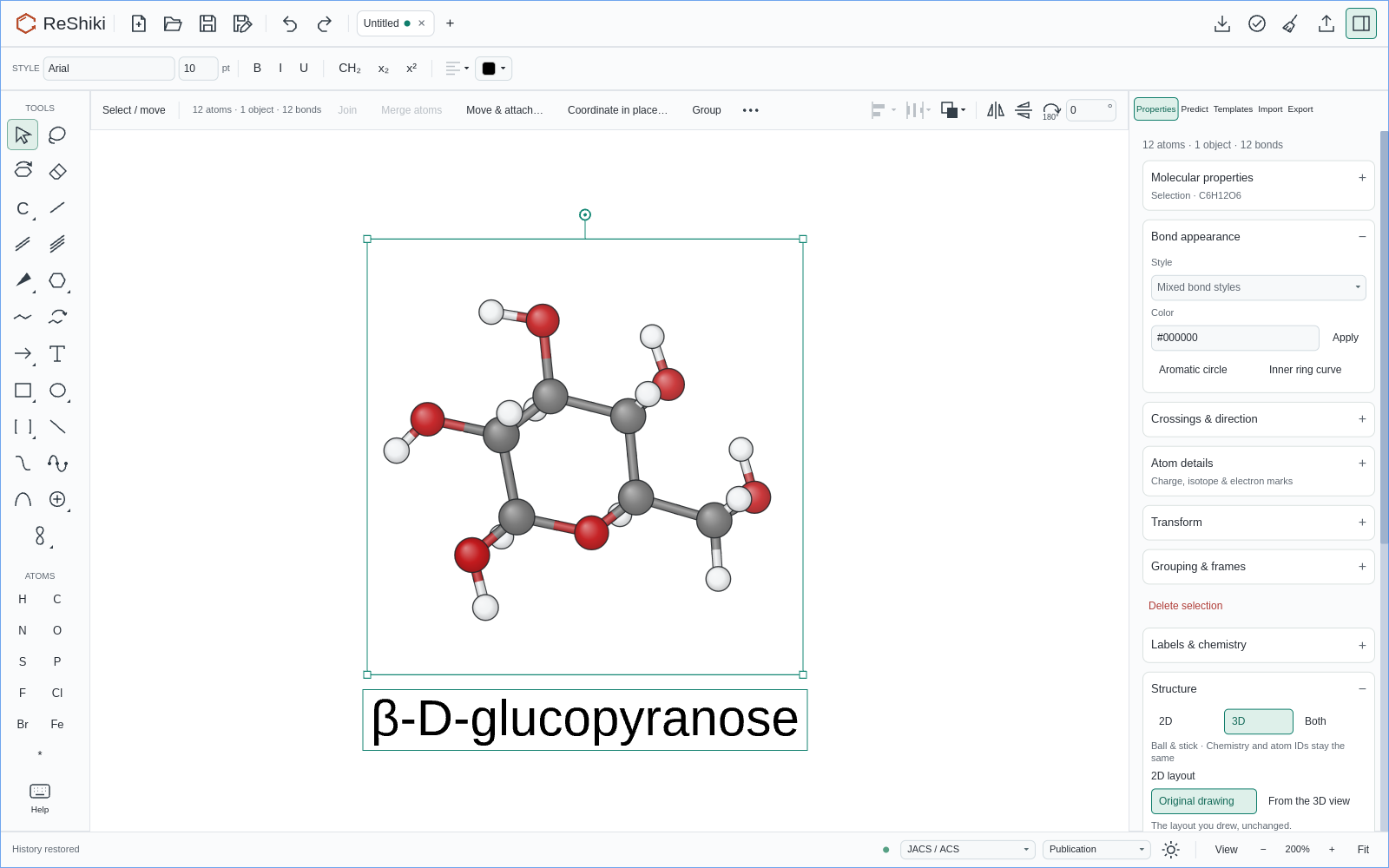
Matched comparisons, inputs and native/browser checks cover the visible changes and the chemical/native round trips. Contributed by @Ameyanagi.
@Ameyanagi — ReShiki remembers the chosen canvas brightness for new drawings and the next launch, while keeping each saved drawing’s own appearance (PR #581, restart and browser reload evidence). The independent View → Interface preference remains available.
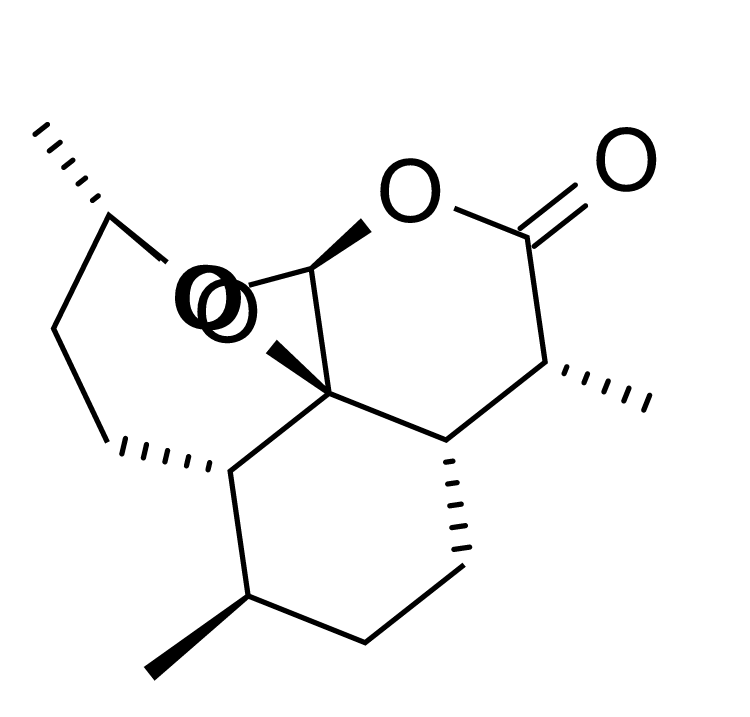
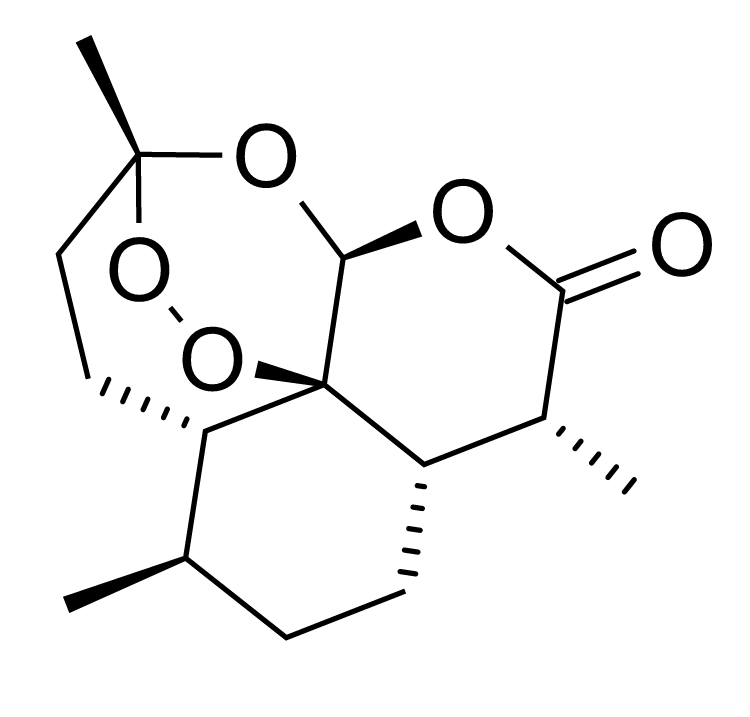
Artemisinin import and cleanup place the peroxide-adjacent methyl outside the cage and keep the peroxide bond visible, while preserving all seven stereocentres. Whole-molecule cleanup refusals now say that the drawing is unchanged instead of asking for an already complete selection. @Ameyanagi, PR #538. Matched renderer review.
| Before | After |
|---|---|
 |
 |
@Ameyanagi in PR #578:
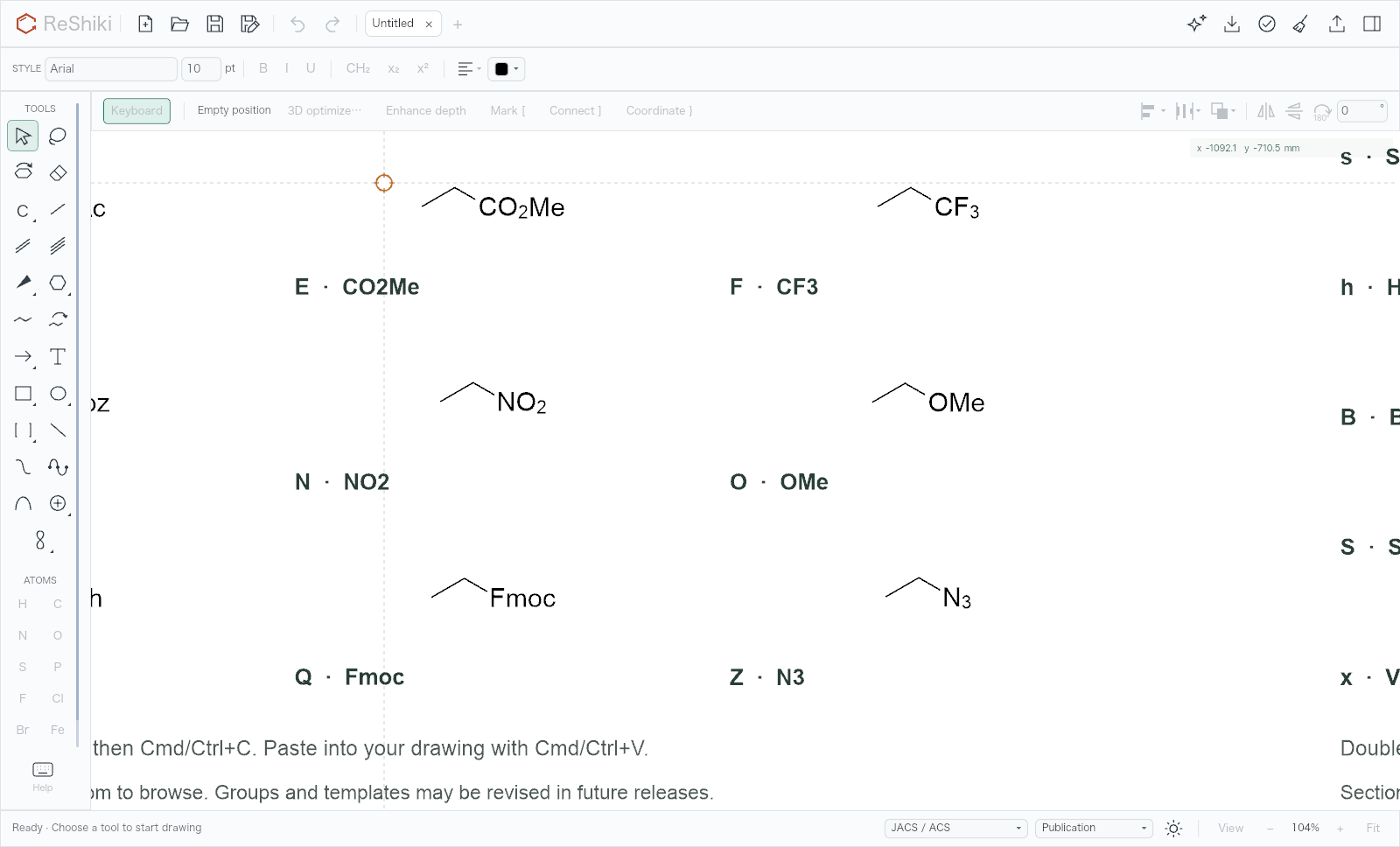
- Keep a pointer-owned keyboard hotspot under the pointer after wheel pan or zoom. Arrow navigation and edits retain their chosen target until actual pointer motion or a click takes over.
- Speed up hover queries on large drawings while preserving label, atom and bond hit results. On the exact 7,728-atom gallery, optimized M1 CPU work from real widget pointer input through app update and retained hover drawing falls from 213.3 ms to 20.0 ms. Three matched native phases keep the hotspot within one bond of the physical pointer; the QA note records host, camera and viewport limits.
| After wheel zoom | During wheel pan |
|---|---|
 |
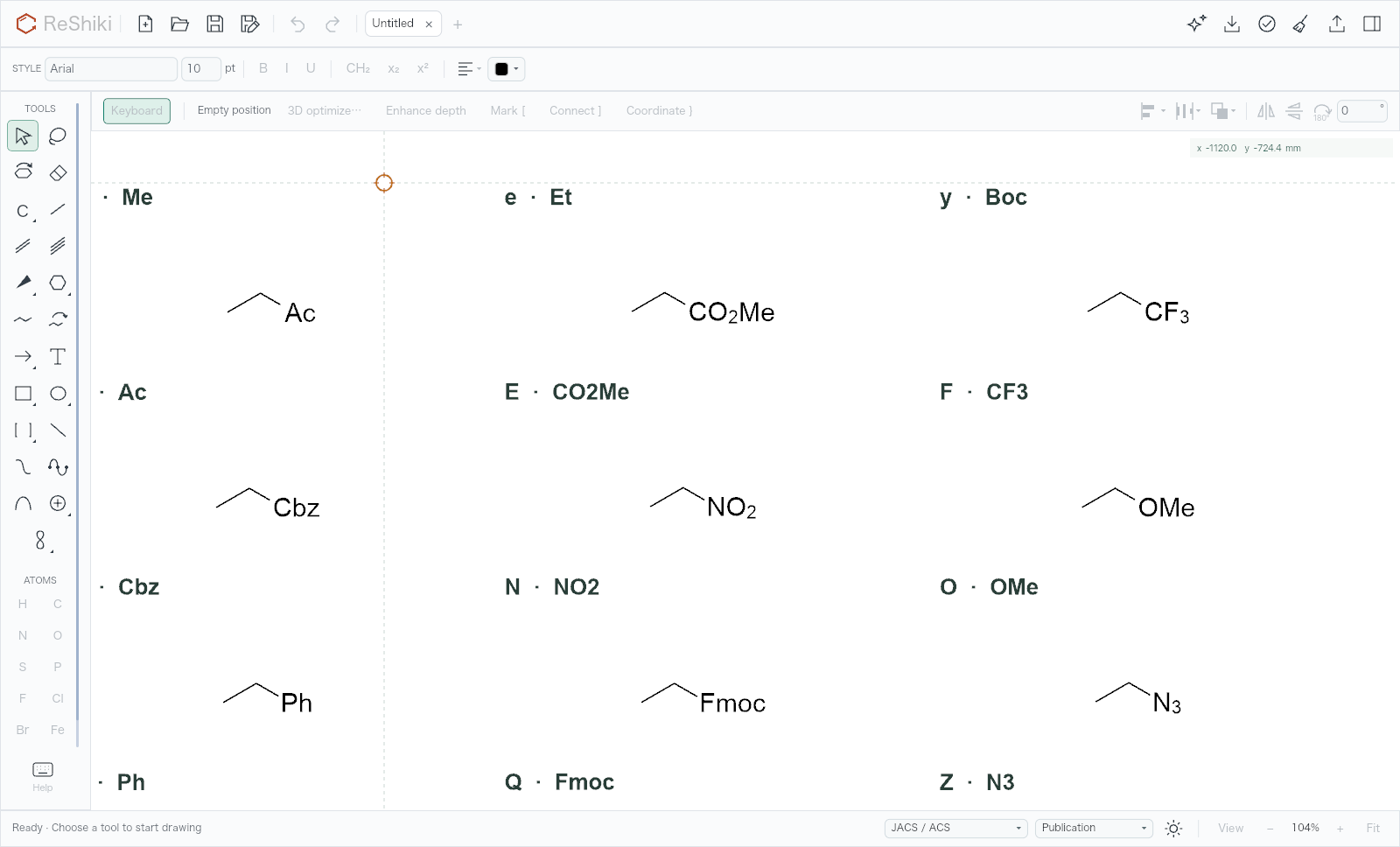 |
The source-pinned QA note includes matched before/after captures, exact fixture and source hashes, quiet benchmark scope, and the distinction between pointer and keyboard ownership.
Measurement limits
Section titled “Measurement limits”The hover CPU comparison includes real widget pointer input, app update and retained hover drawing. Its 213.3 → 20.0 ms result excludes returned task execution, OS delivery, GPU rasterization and presentation. Three predeclared native video phases measured pointer-to-hotspot gaps of 215.63, 121.16 and 199.51 pt before, and 14.08, 7.16 and 13.53 pt after, against a 43.68 pt bond length with ±2 pt measurement uncertainty. These are representative spatial measurements on the recorded M1 host, not an all-frame maximum, event-to-paint latency or application FPS. Full conditions and receipts.
The PDF copy comparison measures accepted command to presentation submission, excluding OS input delivery and GPU scanout. It is one quiet warm M1 copy per build, with different window/framing conditions from the M4 report. Its 53.678 ms first-progress result does not verify the literal 33.3 ms/M4 target. Resolved PDF object graphs and rendered output match; raw serialization can vary even between baseline copies. Full conditions and copied-output checks.
Remaining limits
Section titled “Remaining limits”- The browser editor remains a preview. Printing, the assistant and Office integration need the desktop app. Long operations that run on the browser thread can still pause the page.
- CDXML/CDX export continues to refuse content it cannot preserve. Clearer advice does not remove those format limits or establish a new ChemDraw application round trip.
- Recovery Trash interaction was checked on macOS. Windows and Linux graphical recovery checks remain unperformed in that review.
- Crystal bonds inferred from distances are not proof of chemical valence. Read the crystal import limits before using a drawing as chemical input.
- Windows and Linux release downloads remain unsigned. macOS publication requires signed, notarized and stapled packages; release validation is recorded separately and is not implied by the individual fix reviews.
Version, release notes and compatibility guidance: @Ameyanagi in PR #583.
Thank you to all the contributors who helped improve ReShiki.